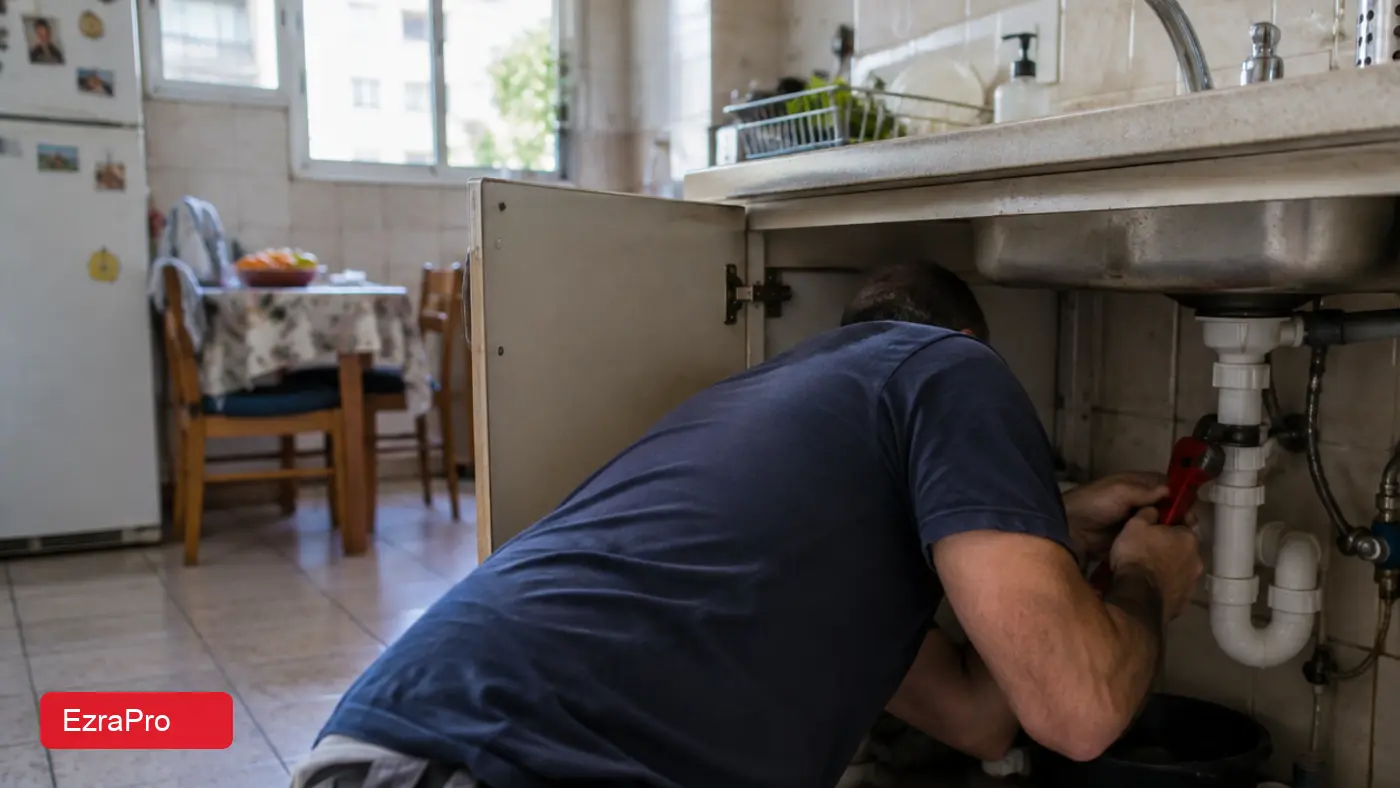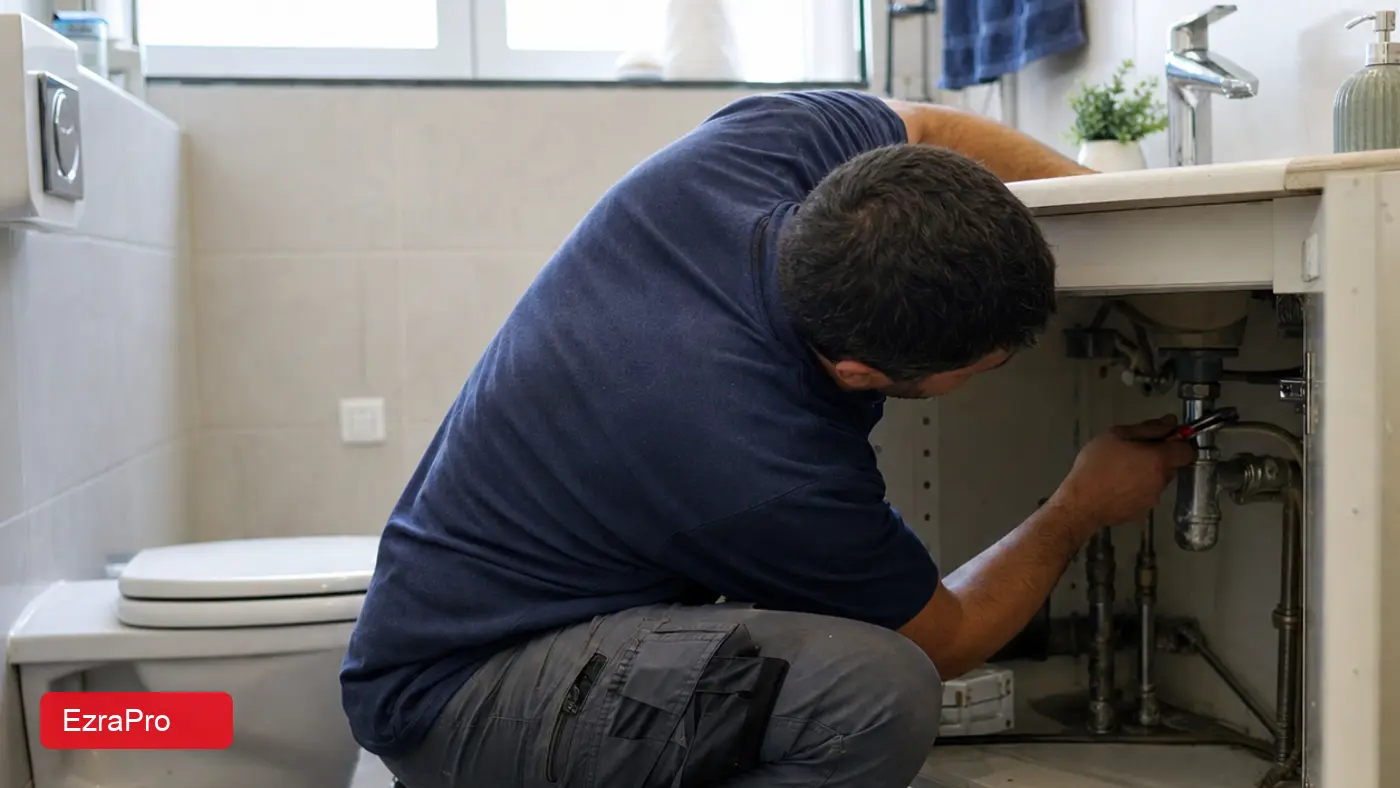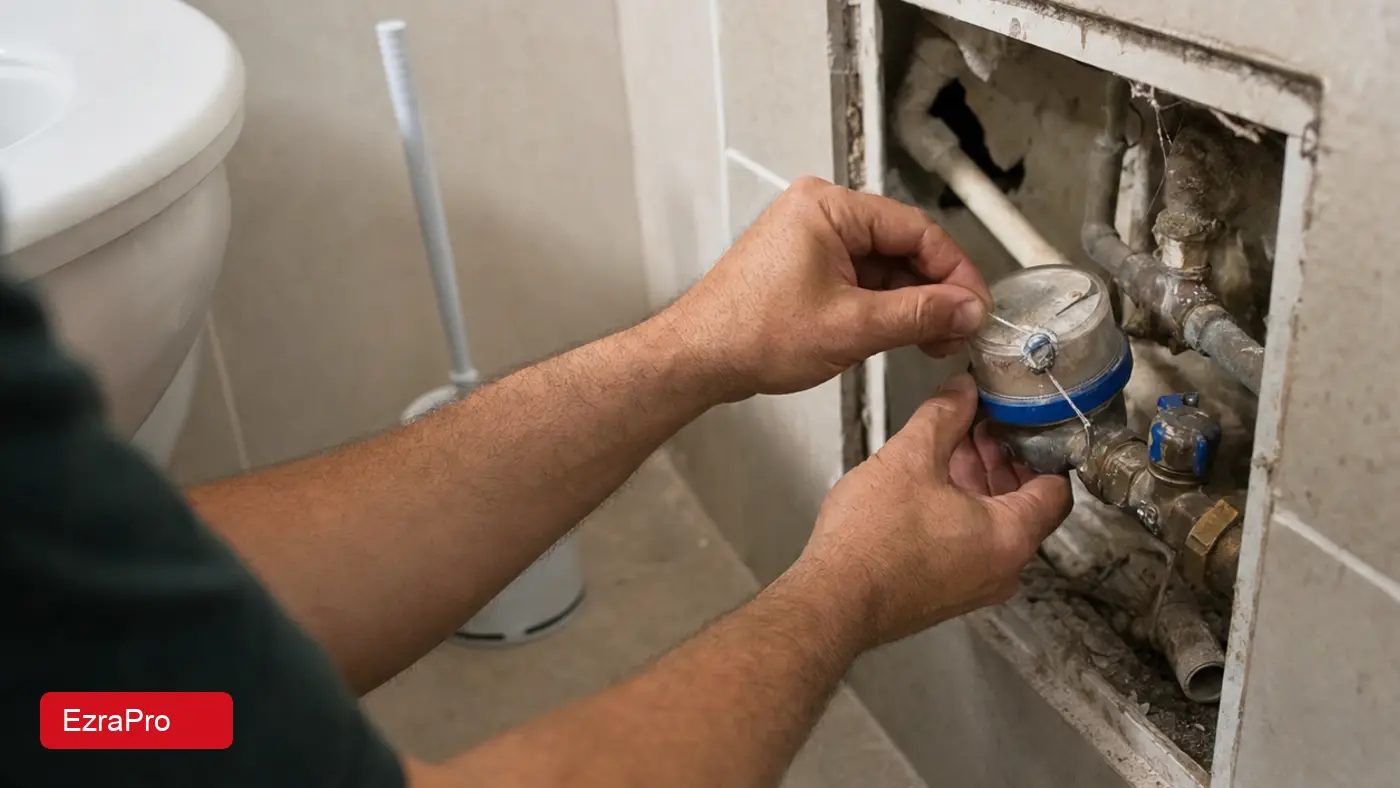
If a plumber breaks a seal during a visit, treat it as an issue to document and report, not something to patch up quietly. In Israeli apartment buildings, seals may be attached to water meters, shutoff points, or other controlled utility components. The safest approach is to stop unnecessary work, record what happened, and contact the party responsible for that specific installation.
Related read: how to choose a home service professional and document the job.
Confirm what was actually damaged
Not every plastic tie or sticker near pipework is an official seal, but if the damaged part was attached to a meter, valve, connection point, or another controlled component, assume it matters until proven otherwise. Do not try to reattach it yourself or let the plumber improvise a replacement. A homemade fix can look worse than an honestly reported accident.
Ask the plumber to stop working on that area and explain, clearly and calmly, what he was doing when the seal came off or broke. You need to understand whether the damage happened while accessing the pipework, whether the sealed part should have been touched at all, and whether the repair moved beyond the original scope.
If there is no leak and no immediate hygiene or flooding risk, avoid further dismantling. The less the scene changes after the incident, the easier it is to show what happened. If there is an active leak or overflow risk, safety comes first, but document each step as you contain the damage.
- Identify the exact component: meter, inlet, shutoff valve, filter, or housing
- Pause work on that section until the situation is clear
- Keep any broken pieces and do not install a substitute yourself
Document the situation properly
Take several photos from different distances: a wide shot of the area, a closer shot of the component, and detailed images of where the seal was attached. A short video is also useful, especially if it shows the apartment context, the fixture, and the damaged part in one continuous clip. Good documentation is often more important than a heated argument on site.
Write down the date, approximate time, what job was being done, and when the damage was noticed. If you are communicating by WhatsApp or text, ask the plumber to confirm in writing that the seal was damaged during the visit. Even a brief written acknowledgement can be valuable later.
Keep the booking details, chat history, before-photos if you have them, and any service notes connected to the visit. If the plumber came through a platform, agency, or maintenance company, report the issue through the official channel as well, so there is a timestamped record beyond your private chat.
- Photograph and film before anyone tries to tidy up the area
- Move key facts into written messages
- Save the booking trail and all related communication
Notify the right body without delay
A broken seal should be reported to whoever is responsible for that specific utility component. Depending on the building and the installation, that may be the water corporation, building management, maintenance provider, or another authorised body. If you are unsure, start with the paperwork for the meter or ask the building committee who normally handles that infrastructure.
The biggest mistake is assuming it is minor and can be ignored. At the next inspection or service visit, the missing or damaged seal may be noticed anyway, and by then it can be harder to show that the damage happened during a legitimate repair call. Prompt reporting shows that you did not try to hide the incident.
When you call or message, stick to facts: where the component is, when the damage was discovered, what work was underway, whether water is shut off, whether there is a leak, and whether you have photos. Avoid guessing at technical causes if you are not sure. Clear reporting usually leads to clearer instructions.
- Report it on the same day if possible
- State facts, not theories
- Ask whether normal water use is allowed until inspection
Handle the plumber dispute in a practical way
If the plumber admits the mistake, ask for that admission in writing rather than relying on a verbal apology. A message, service note, or update in the booking thread is enough if it clearly states that the seal was damaged during the visit. This is about clarity, not escalation.
If the plumber denies responsibility, do not get pulled into a shouting match. Gather your evidence, end the conversation calmly, and move the issue into writing or into the support system of the platform that arranged the job. A documented timeline is far more useful than an argument at the door.
Do not accept vague promises such as 'I’ll sort it out later' unless there is a clear written plan. Also, do not allow an unauthorised person to fit a replacement seal or interfere further with a controlled meter or utility point. Even well-meant shortcuts can complicate the case.
- Get written confirmation where possible
- Escalate through the official booking channel if needed
- Do not allow unauthorised resealing attempts
If there is also a blockage or another home issue
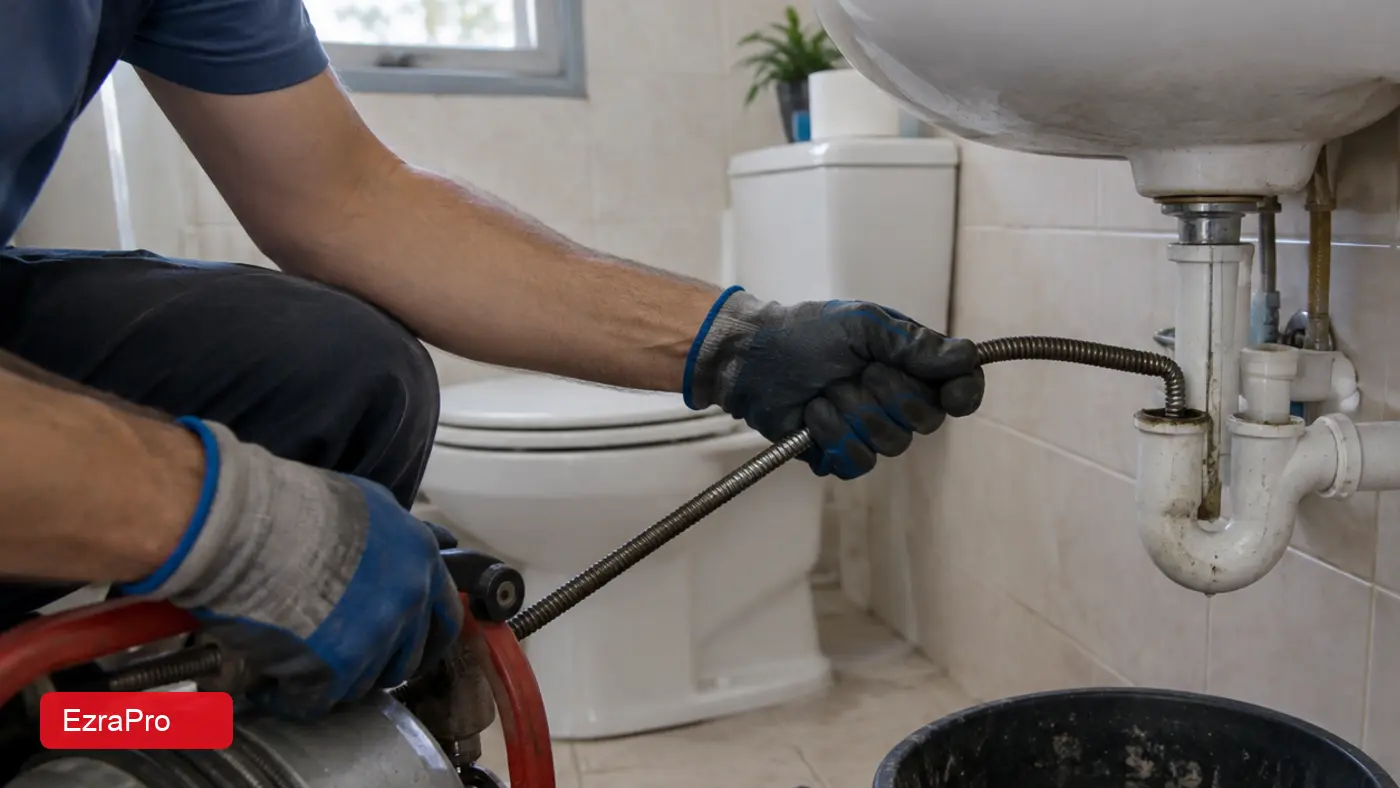
Sometimes the broken seal is only part of the problem. You may also be left with a leaking toilet, a blocked sink, poor drainage, or interrupted water flow. Treat these as separate tracks: report and document the seal issue, then deal with the practical plumbing fault through a qualified professional who understands the limits of what can be touched.
If the toilet is clogged or the sink is backing up, avoid aggressive chemicals or random dismantling, especially when there is already a dispute about the previous visit. Extra interference can blur responsibility and make diagnosis harder. It is usually better to document the current state and bring in another vetted specialist if needed.
For future jobs, ask before work starts which components the plumber expects to access and whether any sealed or controlled parts are involved. A short pre-job conversation about boundaries often prevents a much bigger problem later.
- Separate the seal issue from the everyday plumbing fault
- Avoid DIY escalation after a disputed visit
- Clarify access boundaries before future repair work begins