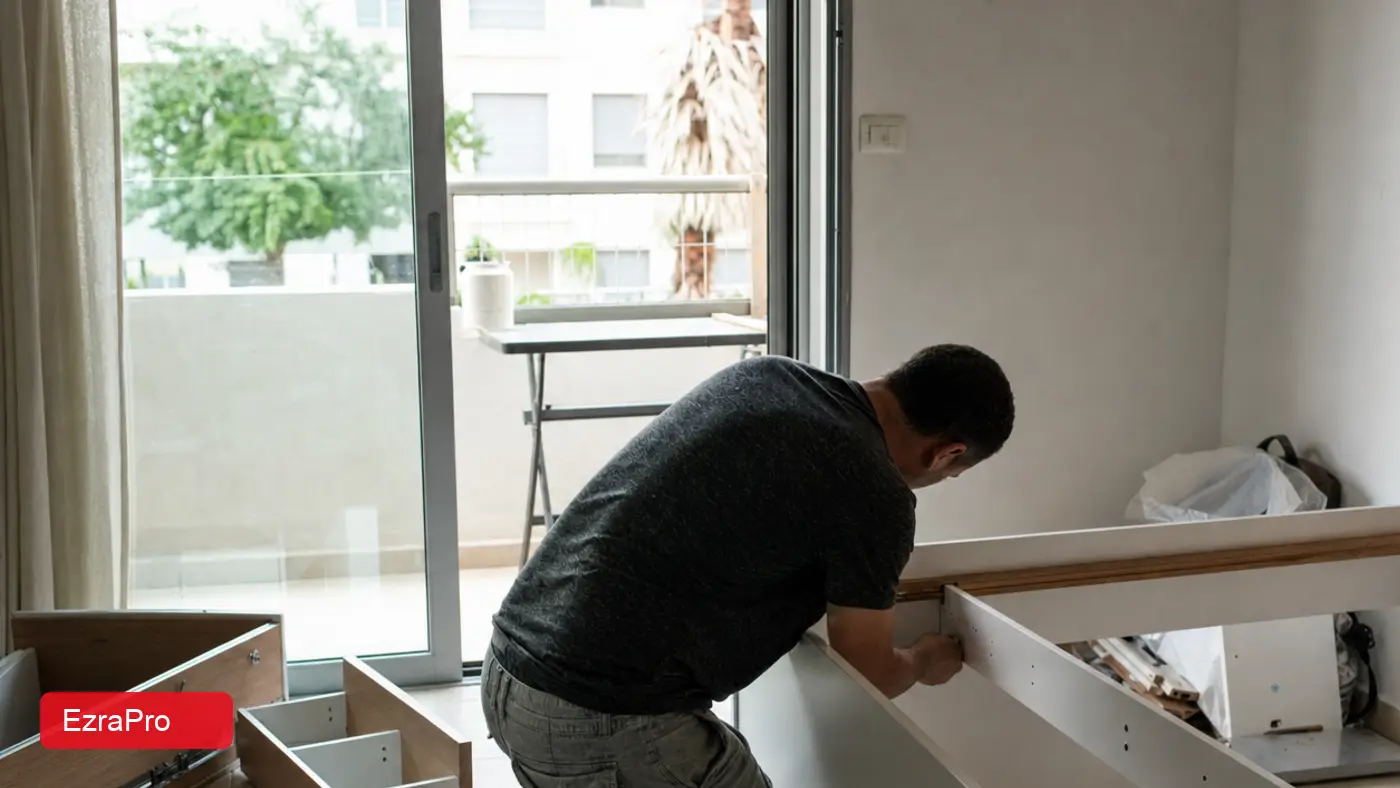
When people search for furniture assembly pricing, they usually want more than a number. They want to know what the quote actually covers, why one assembler asks more questions than another, and which details can change the final cost. In Israel, furniture assembly is usually priced around the scope of work, the conditions inside the home, and any related tasks that go beyond simply following the manual.
Related read: how to choose the right home service professional.
What usually drives a furniture assembly quote
The first variable is the furniture itself. A bedside table, a dining set, a storage wall, a bunk bed, or a wardrobe with sliding doors are not comparable jobs. The number of panels, fittings, drawers, rails, hinges, and moving parts changes both the time required and the level of precision expected from the assembler.
Complexity matters just as much as size. Some flat-pack items are straightforward, while others involve alignment-sensitive doors, soft-close hardware, mirrored panels, lift mechanisms, or hidden fixings that must be handled carefully. Even when two items look similar in photos, one may take much longer because it needs more adjustment at the end.
Home conditions also affect pricing. If the boxes must be carried through a narrow stairwell, if there is limited space to unpack, or if the work is being done in a fully lived-in apartment after a move, the job becomes slower and more delicate. In Israeli apartments, practical access issues often matter almost as much as the furniture model itself.
- Furniture type and overall size
- Number of parts and hardware
- Mechanisms, glass, mirrors, and final adjustments
- Access, stairs, lift, and working space
What may be charged as an extra task
Many customers assume assembly means everything related to the item from start to finish. In practice, assemblers may separate the core build from related tasks such as unpacking, sorting hardware, moving existing furniture, removing packaging, or fine-tuning doors and drawers after the main structure is complete. That is why two quotes can sound similar but include different scopes.
Wall fixing is one of the most important examples. Tall wardrobes, shelving units, nursery furniture, and some storage systems may need to be secured for stability. That step depends on the wall type, the right anchors, safe drilling points, and whether there may be hidden cables or pipes, so it is often discussed separately rather than assumed.
On-site modifications are another category. You may need a cut-out for a socket, an opening for cable management, a small adjustment to fit a niche, or partial disassembly to get the item through a doorway. Those are no longer standard assembly in the narrow sense, and they can change how the work is assessed.
- Wall anchoring or anti-tip fixing
- Door, drawer, and rail adjustment
- Packaging removal and cleanup
- Minor on-site modifications
How to ask for a useful quote
The more specific your request, the more realistic the quote will be. Send the product link or model name, photos of the boxes, the instruction manual if available, and a few images of the room where the assembly will happen. It also helps to mention building access, lift availability, parking constraints, and whether the job must be done within a narrow time window.
Vague requests often create friction later. A customer may think they are booking simple assembly, while the assembler arrives to find heavy boxes that need carrying, an old unit that must be moved first, uneven flooring, or a request to drill and secure the item to the wall. None of that is unusual, but it should be described in advance.
A commercial-intent search like this is best answered with a breakdown, not just a headline price. Ask what is included, what counts as an add-on, and what happens if hardware is missing or a factory defect is discovered during assembly. Clear scope beats a low but incomplete quote.
- Share model, manual, and room photos
- Mention access, parking, and timing limits
- Ask what is included in the scope
- Clarify missing parts and defect handling
Choosing the right assembler for your home
A reliable furniture assembler will usually ask several practical questions before confirming the job. That is a good sign, not a complication. It shows they are trying to understand the furniture, the room, and the likely workflow instead of giving a generic answer that may later change.
It is also worth checking whether the assembler brings all standard tools, whether power access is needed, and how they handle situations where the manufacturer’s instructions are unclear or the package is incomplete. These details affect both the customer experience and the final scope of work.
If your assembly is part of a wider home setup, separate the tasks clearly. Fixing furniture to the wall, moving an electrical point, or installing lighting near a unit may involve another trade altogether. The same logic applies to other home services in Israel, where the final quote depends heavily on what is included and how well the job is described.
- Prefer clear questions over instant generic quotes
- Confirm tools, access, and responsibility for missing hardware
- Separate assembly from electrical or drilling-heavy work
- Keep the agreed scope in writing