There is no single answer to “how much does cat grooming cost” without knowing the cat’s coat, temperament and the service format. A useful comparison starts with the work included, the conditions that can extend the appointment and the details a groomer needs before confirming a quote.
Related read: how to compare a pet-service quote.
What a cat grooming service may include
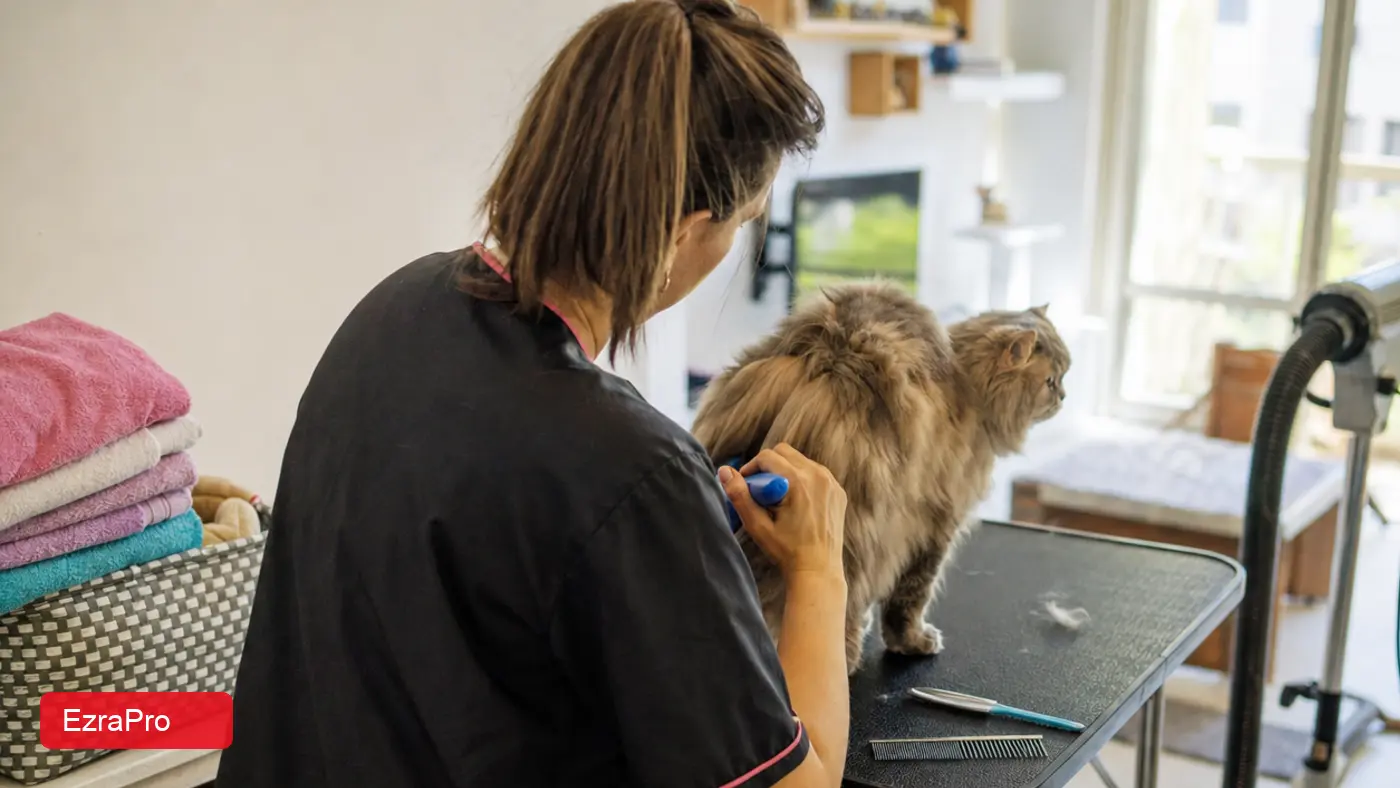
A basic appointment may cover a coat check, brushing, bathing with a suitable product, drying and general tidying. Depending on the groomer and the cat’s needs, the service may also include a sanitary trim, nail clipping and careful work around the paws, eyes or underside. Service names are not standardised, so ask for a task-by-task description rather than comparing package labels.
A short-haired cat with a maintained coat is a different job from a long-haired cat with a dense undercoat. Mats, built-up dirt, a first appointment or fear of the dryer can all require more time and a slower approach. Tight mats should not automatically be pulled apart; in some cases, careful local removal is safer. That decision should be discussed before the work starts.
What affects a grooming quote in Israel
The main factor is the actual workload. A groomer may consider coat length and density, the number and location of mats, whether the cat needs a full or sanitary trim, nail condition and how calmly the animal tolerates bathing and drying. A cat that needs pauses, gradual handling or a second person for safe support requires a different appointment from one that stays relaxed throughout.
The location also changes the practical setup. For a home visit, the quote may reflect travel, preparing a work area and limitations such as a small bathroom or no safe place for equipment. At a salon, the equipment and workspace are usually ready. If your address is outside the groomer’s normal area, share it before booking and ask whether the visit has different conditions.
How to compare quotes without paying for the wrong service
Send the groomer clear photos: one from the side, one from above and close-ups of any problem areas. Mention the coat type, visible mats, the last grooming appointment and the cat’s reaction to water, noise and paw handling. This gives the professional a better basis for assessing the job and reduces the chance that the scope will change unexpectedly once the appointment has begun.
Ask for the agreed scope in writing, including what counts as an extra task and what happens if the cat cannot safely complete the session. Confirm whether bathing, drying, nail clipping, mat removal, cleaning the area and travel are included or treated separately. Experience with cats, calm handling and clear stop rules matter more than a vague quote that looks attractive but leaves the important details open.
Preparing the cat and checking the result
Do not try to cut out mats with household scissors before the appointment. Cat skin is delicate, and a tight mat can hide irritation or a wound. Prepare a carrier, a familiar towel and a quiet, draught-free room. Tell the groomer in advance about pain, skin problems, suspected parasites or unusually strong stress responses; grooming is not a substitute for veterinary care.
After the session, look for cuts, pronounced redness, damp patches or signs that the cat became overheated or chilled. Ask which products were used and what home brushing routine is recommended. A reliable groomer explains what was completed, which areas could not be handled because of the cat’s behaviour and how to maintain the result without making unrealistic promises.