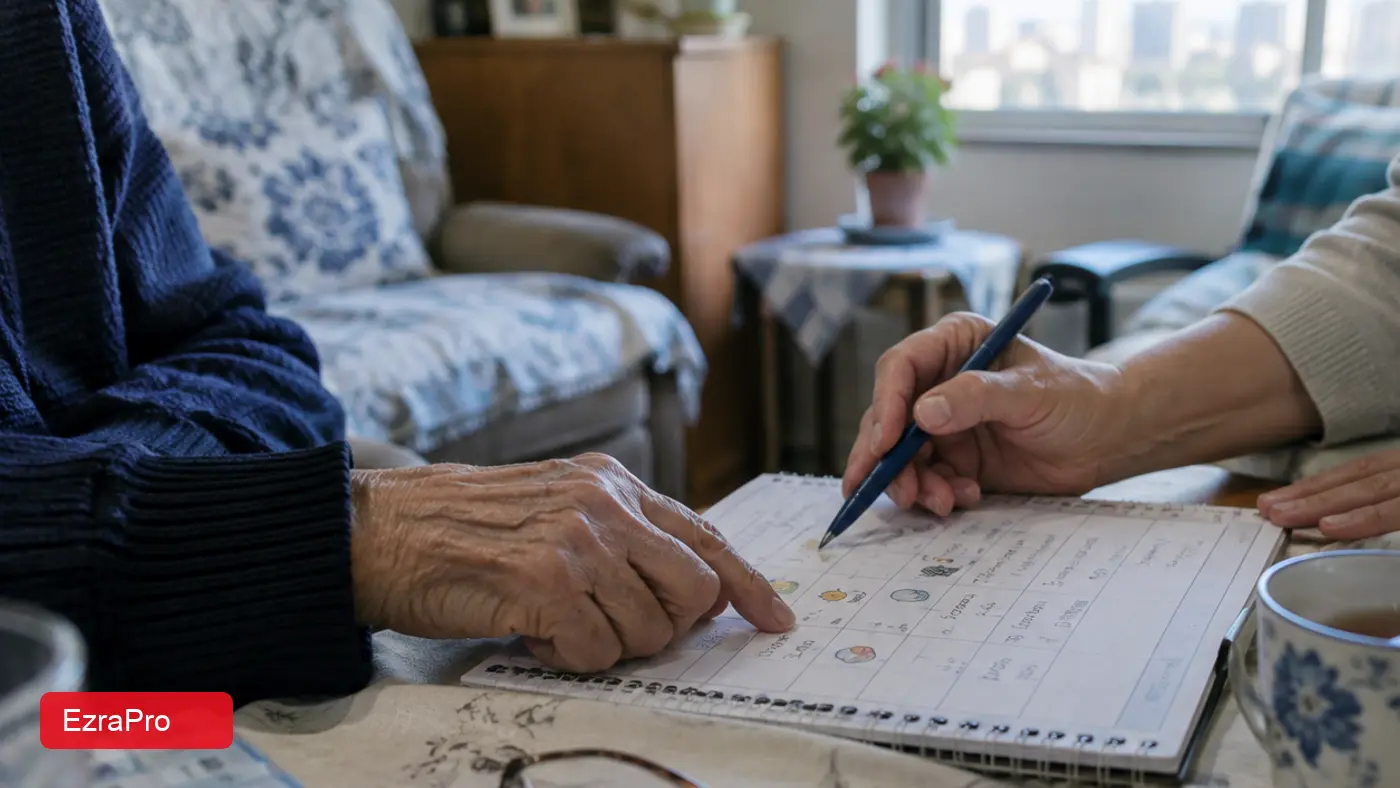
When an older relative can no longer manage everyday tasks safely, start by describing the help they need—not by choosing a caregiver immediately. In Israel, families may also need to check eligibility for the National Insurance long-term care benefit and work out how approved support can be arranged in practice.
Related read: compare caregiver arrangements and the factors that shape them.
What home care is called—and what it can include
In Israel, families commonly refer to home care or long-term care; the person providing day-to-day support is often called a caregiver. In Hebrew, you may hear מטפל/ת סיעודי/ת. This can mean help with dressing, bathing, meals, mobility or supervision, but it does not automatically mean the caregiver is qualified to provide medical treatment. Ask a doctor or health service about clinical tasks that require a trained professional.
Care can take different forms: scheduled visits, support arranged through a nursing-care company, a privately hired caregiver, or a live-in arrangement. The right option depends on the older person’s routine, functional needs, preferences and the family’s ability to coordinate support. Write down the specific tasks and times when help is needed before comparing providers; a broad request for “care” may not make clear what the job actually involves.
Check whether a National Insurance benefit may apply
Israel’s National Insurance Institute administers a long-term care benefit, known in Hebrew as גמלת סיעוד. Eligibility depends on the programme’s current conditions, including factors such as age, where the person lives, functional dependence or supervision needs, and the applicable income rules. Being an older adult does not by itself guarantee eligibility, and the rules should be checked directly with the National Insurance Institute rather than assumed from informal advice.
Review the current guidance on the official National Insurance website or ask a social worker at the person’s health fund or local welfare service to explain the process. Make a practical record of the activities that are difficult and the help required in an ordinary day. Include relevant medical information, but focus on how the condition affects daily functioning. Clear examples—such as needing help to get up or being unsafe alone—are more useful than a general statement that the person is struggling.
- List support needs such as moving around, bathing, dressing, eating, household safety and supervision.
- Check which medical documents are requested for the application and keep copies of forms and correspondence.
Submit the application and prepare for an assessment
Apply to the National Insurance Institute using the current form and submission method listed on its official website. Check the latest document requirements before sending the application, since instructions may change. Describe the person’s actual day-to-day limitations as well as relevant health information. If there has been a sudden deterioration or a recent hospital discharge, mention it and ask the hospital or health-fund social worker what coordination is appropriate.
An assessment of care needs may form part of the process. The format and steps can depend on the circumstances and current instructions, so follow the notices from the National Insurance Institute and confirm who should take part. It can help to have a relative who knows the person’s routine explain what happens on a typical day. Be accurate: describe what the person can do independently, where assistance is needed and whether being alone creates a safety concern.
Choose a care arrangement and agree on the work
A benefit decision does not, by itself, select a caregiver or settle every practical detail. Ask how support can be used in the person’s case, what a care company will coordinate, which tasks are included and what happens if a caregiver is unavailable. If the family is considering a foreign worker who lives in the home, check permit and employment requirements with the relevant Israeli authorities before making arrangements; do not rely solely on a verbal promise from an intermediary.
Before care begins, agree on duties, schedule, preferred language, family contact and a plan for absences. Ask about relevant experience and references, and keep medical procedures separate from ordinary household support unless a qualified professional has confirmed who may perform them. After the first visits, check in privately with the older person about comfort, dignity and reliability, and adjust the plan if needs change. For a separate overview of what shapes caregiver arrangements, see how caregiver options and quotes can be compared.