An air conditioner that is not heating may simply be set to the wrong mode, have a target temperature that is too low, or still be in its start-up delay. You can check the controls and airflow without opening the unit. If basic checks do not restore heat—or you notice an electrical warning sign—switch it off and arrange a professional inspection.
Related read: choosing an electrician in Israel.
Check the mode and temperature first
Select HEAT on the remote; it is often marked with the word or a sun symbol. AUTO does not always produce the result you expect because the unit decides how to operate. Set the target temperature above the current room temperature and make sure the fan has not been switched off manually.
Wait a few minutes after changing the setting. A heat-pump air conditioner may need time before it starts delivering warm air, and the indoor fan may not run immediately. Check the remote batteries and confirm that the selected mode and temperature are showing correctly on the display, if your unit has one.
Look at the filter and airflow
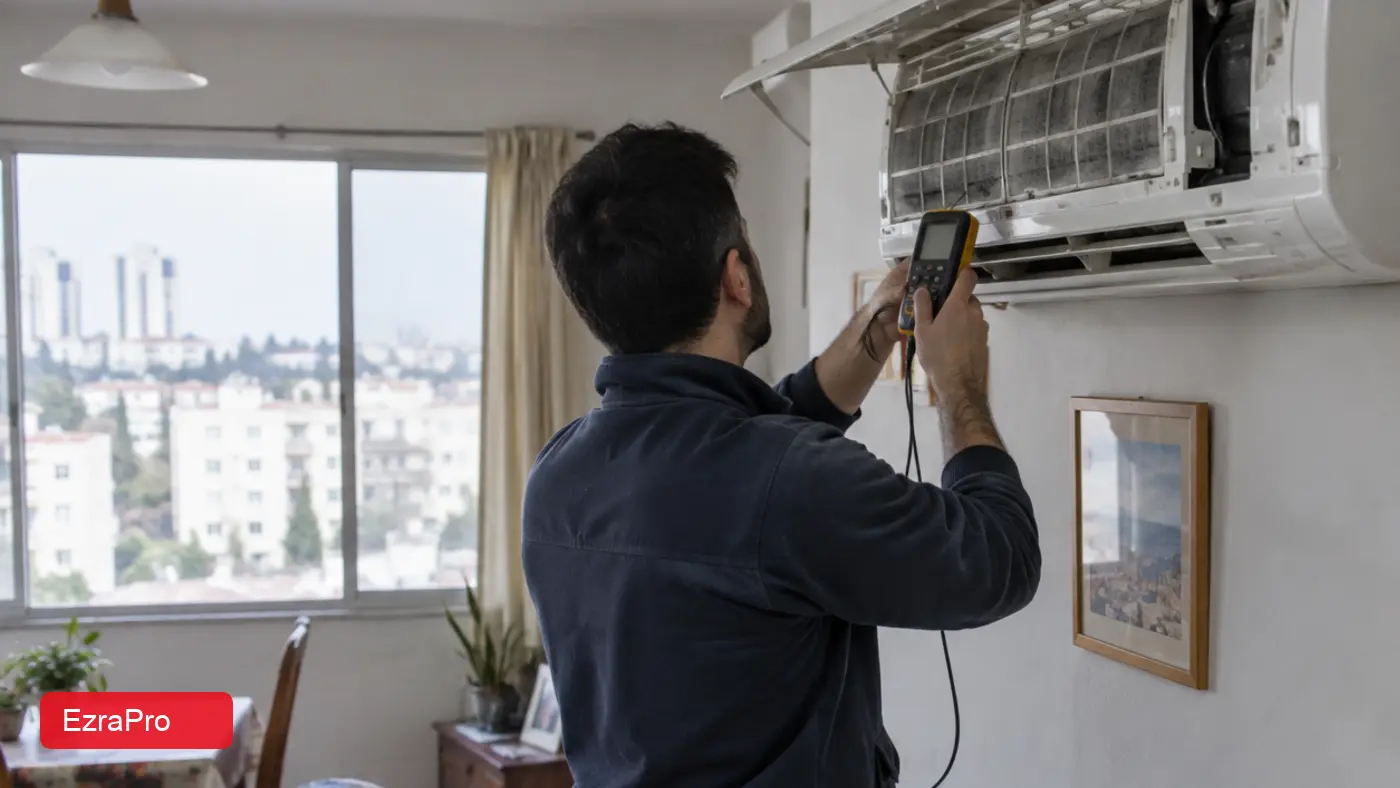
A dirty filter can restrict airflow and make the system work poorly. If the manufacturer’s instructions allow user cleaning, switch the unit off, remove the filter carefully and clean it as directed. Let it dry completely before putting it back. Do not pour water into the unit or use cleaning products that the instructions do not recommend.
Check that curtains, furniture or stored items are not blocking the indoor air inlet or outlet. Make sure there is no obvious obstruction around the outdoor unit. Keep the check to places you can reach safely: do not climb to an unsafe spot, remove covers or reach inside the equipment.
Why heating can pause temporarily
In heat mode, the system may briefly delay airflow while the indoor heat exchanger warms up. In cool, damp weather, the outdoor unit may run a defrost cycle, temporarily interrupting heat indoors. A short pause on its own does not prove that the unit is broken; normal operation may resume when the cycle ends.
Notice whether the room temperature begins to change after the unit has been running for a while, rather than judging only by how the air feels right at the vent. If the air stays cold, heating repeatedly stops, an error code appears, or the outdoor unit behaves unusually, note the model and any displayed code. Do not try to add refrigerant or adjust internal components yourself.
When to switch it off and call for help
Arrange a technician’s assessment if the correct mode and a clean filter do not restore heating, or if the problem keeps returning. Possible causes include a sensor, fan or heat-transfer fault, but one symptom alone is not enough to identify the failed part reliably.
If you smell burning, see smoke, hear crackling, or the circuit breaker trips again, turn the air conditioner off and leave it off until it has been checked. Do not open electrical compartments or work on the wiring yourself. If the symptoms point to a problem with the apartment’s electrical supply rather than the AC itself, this guide to choosing an electrician in Israel can help you prepare for that conversation.