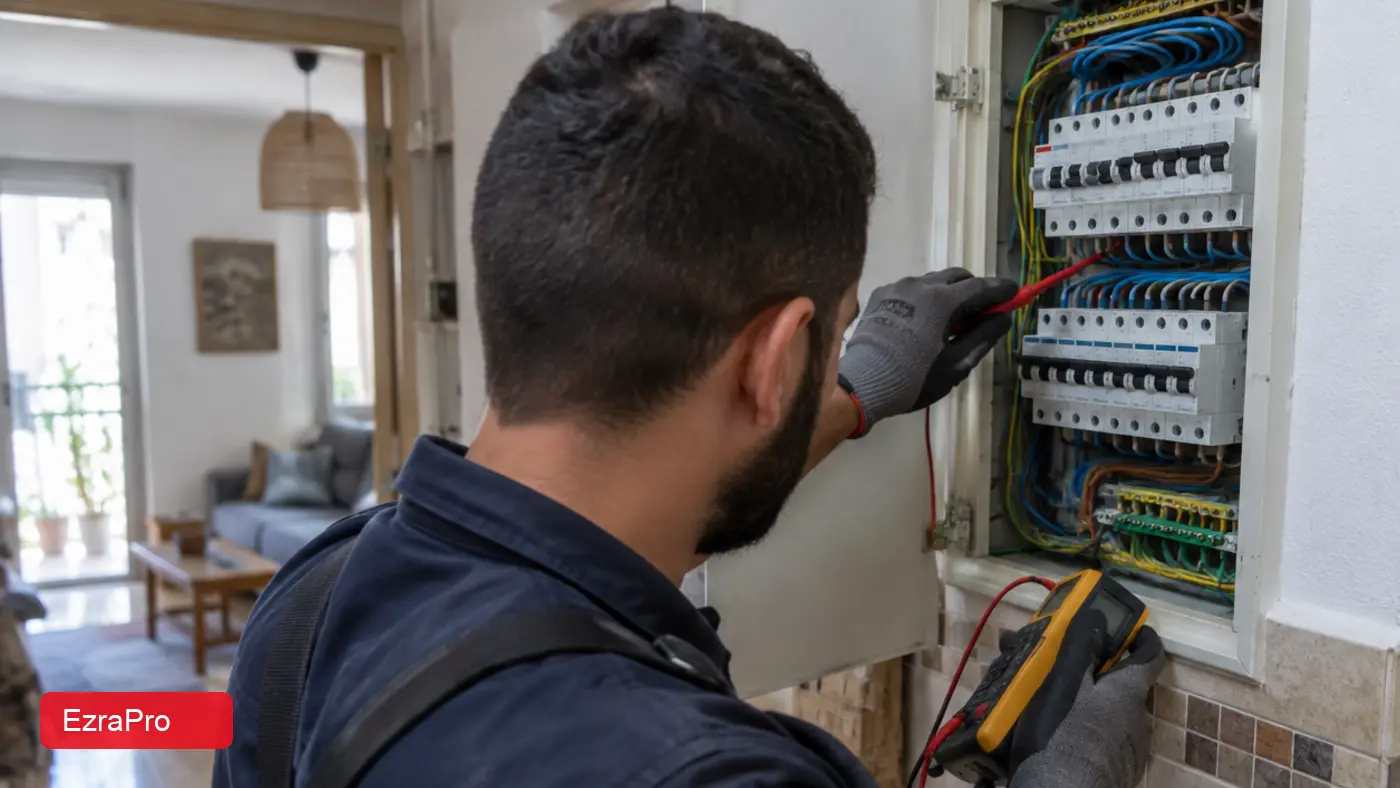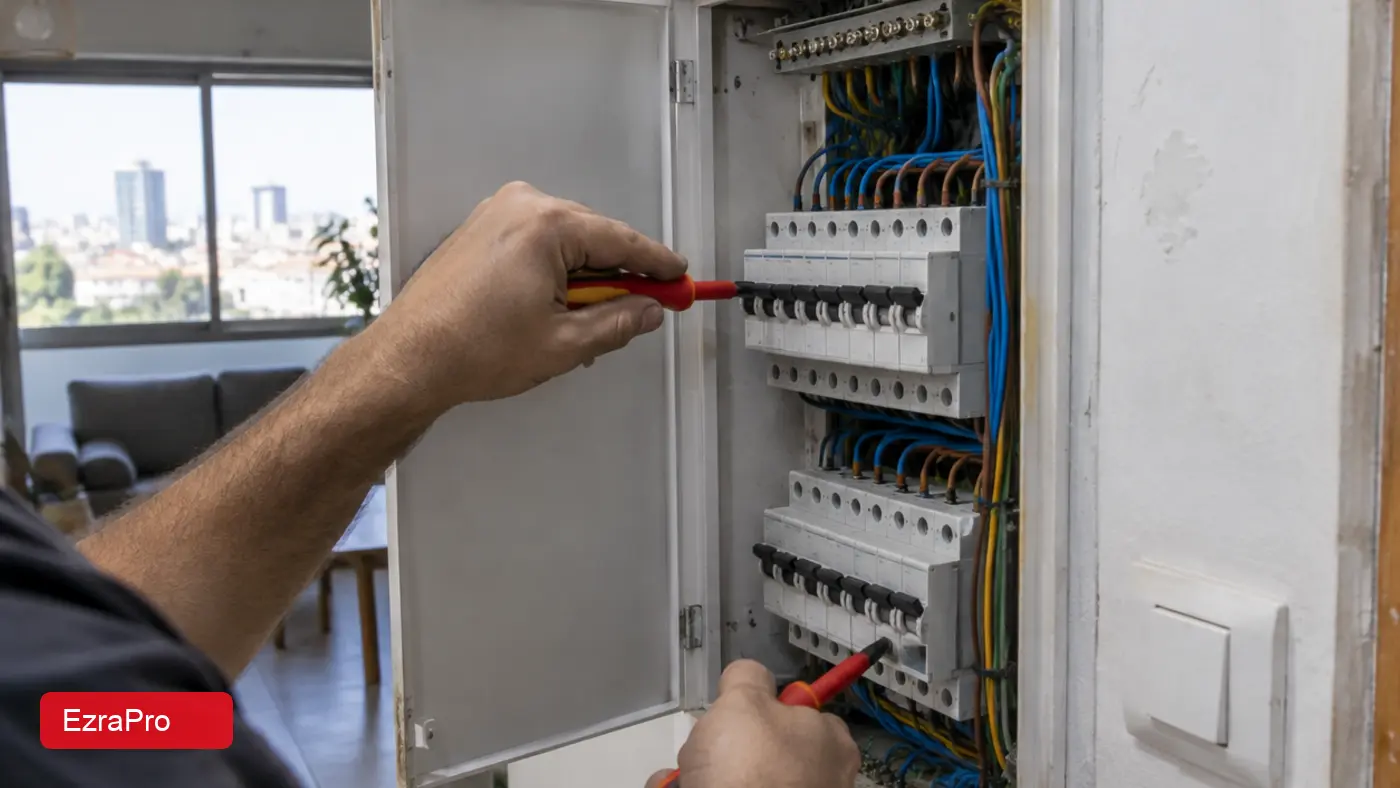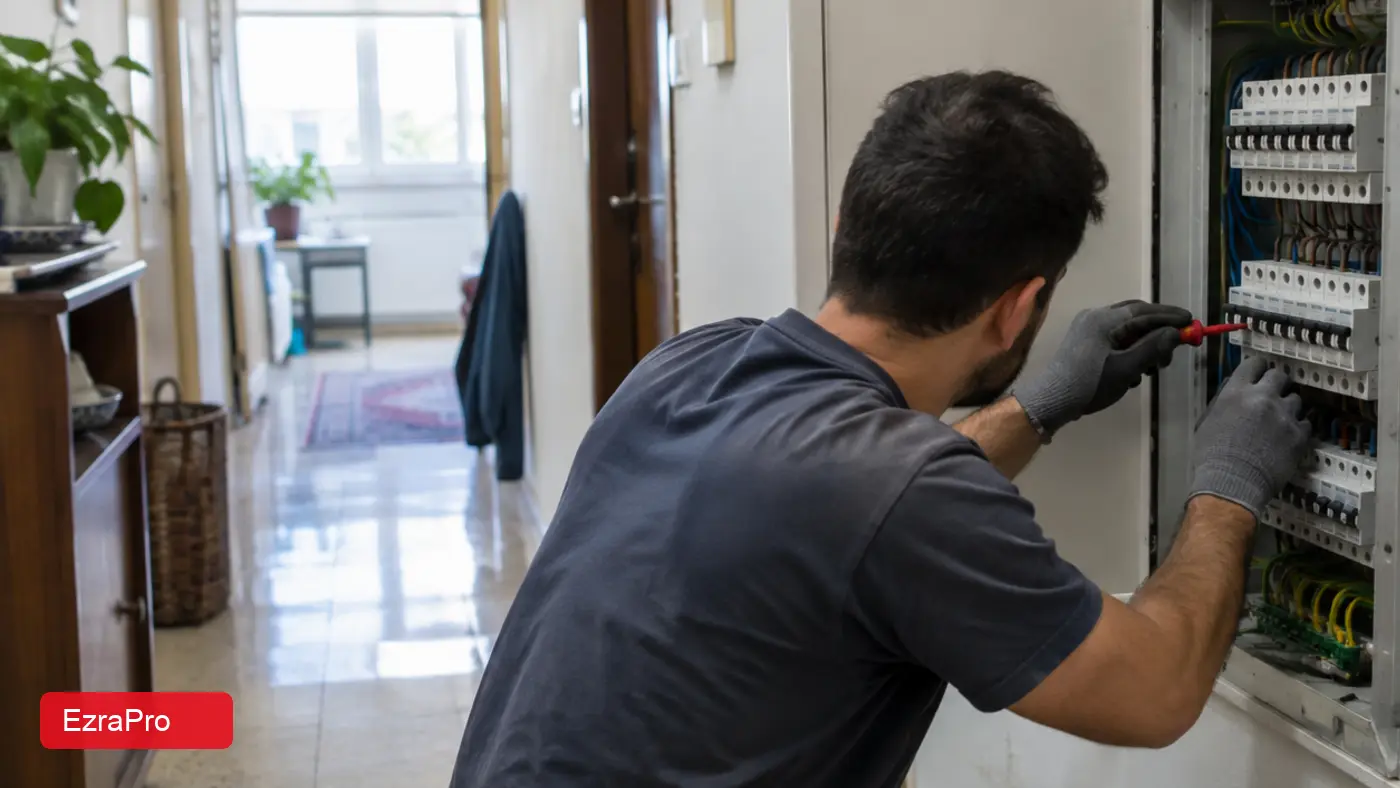
A new panel quote is shaped by more than the enclosure and breakers. The condition of the existing wiring, the layout of circuits, the protection required and whether a three-phase change is being considered can all affect the work. This guide explains what to ask so you can compare like-for-like proposals.
Related read: how to choose an electrician in Israel.
What does replacing a panel involve?
“Replace the panel” can mean different things. In one home, the electrician may be able to replace the enclosure and components while keeping sound existing circuits. In another, the job may involve reorganising circuits, correcting connections, checking incoming cables or dealing with faults found once the panel is opened. Those are not interchangeable scopes of work.
A photo of the closed panel can help start a conversation, but it cannot show the condition of wiring and connections inside. An electrician will need to assess the installation, available space and the circuits in use. Explain why you are considering replacement: a fault, lack of room, a renovation or new appliances that may change the electrical requirements.
What shapes the quote?
The proposed panel layout, the number of circuits to connect and label, and the type and compatibility of protective devices all matter. Access to the panel, the state of its recess or cabinet, removal work and any making-good can also change the scope. If existing wiring is old, damaged or unclear, further checks or repairs may be needed and should be identified separately.
Ask whether the proposal includes the panel and components, removal of old equipment, circuit labelling and post-installation checks. Clarify what is excluded and how the electrician will get approval before doing additional work if a hidden issue appears. When comparing quotes, make sure each electrician is pricing the same scope rather than comparing only the final figure.
Standard home panel or three-phase?
A domestic panel needs to suit the actual home installation and the circuits connected to it. A three-phase arrangement can call for a different layout and a check that the supply and installation are compatible. Replacing a panel alone does not automatically change the supply to the property, so confirm what is already available before treating a three-phase panel as a straightforward swap.
If the work is prompted by a new appliance or concern about electrical load, ask the electrician to explain which parts of the installation need attention. Find out whether the quote covers only work at the panel or also any other work or coordination. Do not agree to changing protective devices to a different rating without a professional assessment of the wiring and the wider installation.
Getting a clear quote and checking the result
Request a written scope that describes the proposed configuration, components, checks and related work. It should make clear whether existing circuits will be retained, how newly discovered faults will be handled and when extra work needs your approval. Photos of the closed panel and a clear description of the problem can help with an initial enquiry, but are not a substitute for an on-site assessment.
Use an electrician whose licence covers the work, and ask them to confirm their credentials before the job begins. At handover, ask what the protective devices do, check that circuits are labelled and ask what tests were carried out. Keep the paperwork and a record of the installed arrangement. For more on choosing a professional, see our guide to choosing an electrician in Israel.
- Do not remove the panel cover to take a picture; photograph only the closed panel.
- Confirm whether removal, materials, testing and repairs to surrounding finishes are included.
- If you notice a burning smell, heat marks or sparking, keep away and seek urgent professional help.