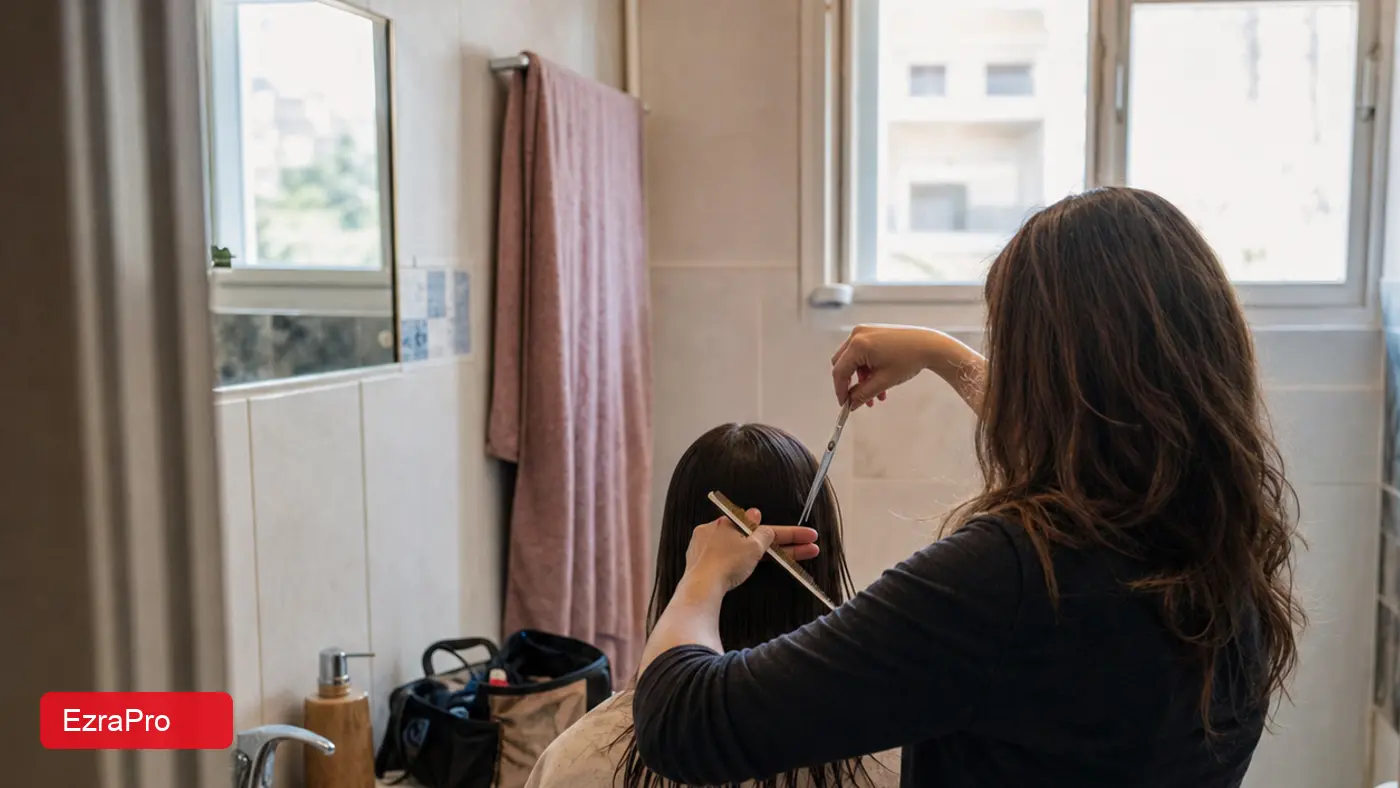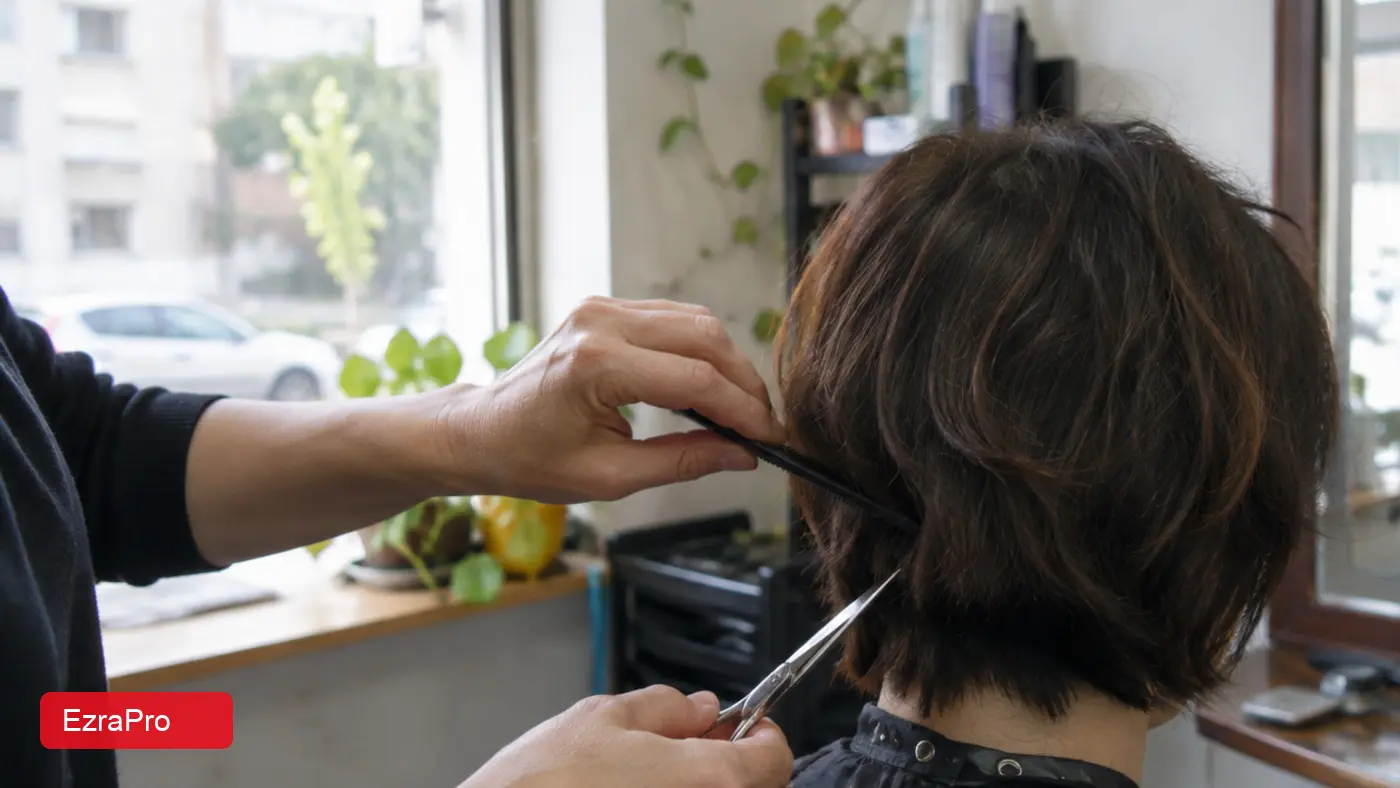
When a haircut does not match what you agreed on, pause before trying to fix it yourself. Document what you see, identify the specific mismatch and contact the salon with a clear request. A calm, written conversation gives you a better basis for discussing a correction without losing more length unnecessarily.
Related read: what to do if a hairdresser damaged your hair.
Pin down what is wrong
Check the cut in ordinary daylight and in its natural state, rather than judging only by how it looked after the salon blow-dry. Note the concrete issue: the length is shorter than agreed, the sides look uneven, the outline is jagged, the layers are more pronounced than expected or the fringe has a different shape. Specific observations are easier to discuss than a general statement that you dislike the result.
A strand that falls differently after you get home does not necessarily mean the whole cut is wrong. Still, you do not have to dismiss a visible difference from the agreed style or the reference image you showed. If the appointment also involved colour, lightening or a chemical treatment and you notice unusual breakage, pain or significant scalp irritation, stop experimenting at home and seek medical advice if symptoms are concerning.
Document the result before making changes
Take clear pictures in daylight from the front, back and both sides. Photograph the hair in its natural state without filters or elaborate styling, and keep the reference image you brought in. Save relevant messages about the requested length or shape, as well as the appointment confirmation or receipt if available.
Write down what you asked for and what looks different. Avoid trimming sections yourself before the salon has seen the result: additional cutting can make the original issue harder to assess and may cost you more length. If you consult another stylist, show the current cut and explain any recent services rather than asking them to reproduce a reference photo without assessing what is possible.
Contact the salon with a specific request
Message the stylist or salon manager promptly and keep the tone factual. Include the appointment date, describe two or three precise differences and attach your pictures. For example: “I asked to keep the length around my shoulders, but the back is noticeably shorter than we discussed. Could we talk about what can be adjusted?” In Israel, use Hebrew or English—whichever lets you describe the issue accurately—and ask for important next steps in writing if that helps avoid misunderstandings.
Ask who will review the cut, when you can come in and what options the salon proposes. The answer might be a small shape adjustment, a consultation or another approach, depending on the cut and hair condition. Before agreeing, ask what will be cut, how the result is expected to change and whether you can start with an assessment only. You do not need to agree to a service you do not understand or feel comfortable with.
Choose whether to return or get another opinion
A correction at the original salon may make sense if the stylist understands the mismatch, listens carefully and offers a clear plan without pressuring you. Confirm what can be changed now and what may require time for the hair to grow. After any adjustment, check the result in daylight before agreeing to further changes.
If you have lost confidence or the proposed fix involves taking off substantially more length, consider asking another stylist for an opinion. Show before-and-after photos, explain what services were done and ask about the limits of what can be corrected. A previous shape may not be immediately recoverable; a temporary styling option and time to grow the hair may be more realistic. If the disagreement continues, keep a written timeline and state the outcome you are requesting, sticking to details you can document.